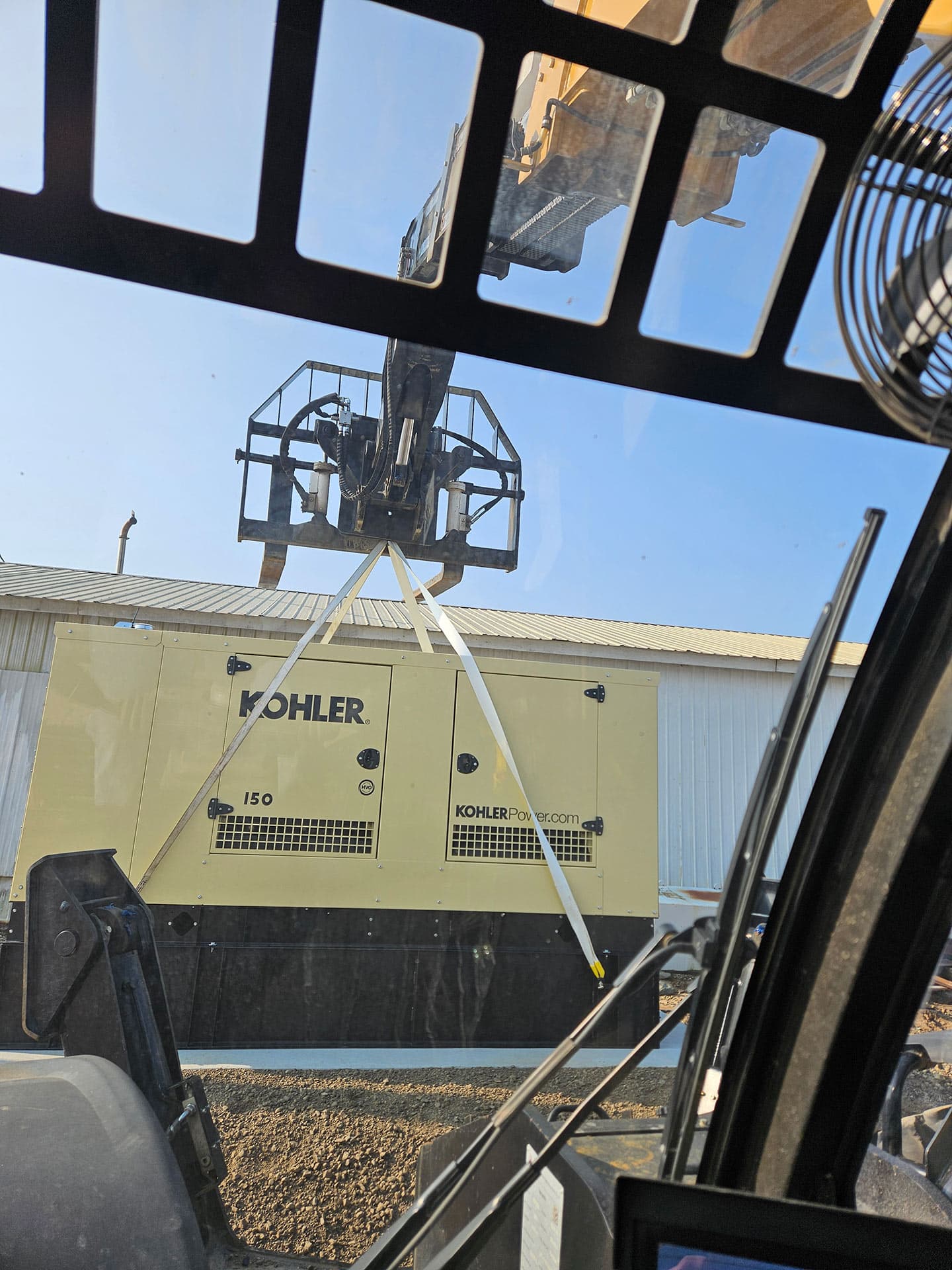
Power outages cost more than lost electricity. They can shut down production lines, spoil refrigerated inventory, interrupt patient care, and damage expensive electrical equipment.
For healthcare facilities, manufacturers, data centers, and commercial buildings across Minnesota, even a short outage can create thousands of dollars in losses.
That’s why more businesses are investing in commercial standby generators and whole-building surge protection.
Together, commercial standby generators, automatic transfer switches, and whole-building surge protection help keep critical operations running while protecting sensitive electrical equipment.
The Shield: Facility-Wide Commercial Surge Protection
Many business owners assume lightning is the biggest threat. In reality, utility switching, transformer failures, and equipment cycling inside the building account for many damaging power surges.
Even small voltage spikes repeated over time can shorten the lifespan of sensitive electronics. That’s why facility-wide surge protection starts at the service entrance, protecting critical equipment before damage occurs.
Main-gear surge protection helps protect:
Healthcare Facilities
Protect patient care, imaging equipment and life safety systems.
Manufacturing Plants
Prevent production downtime and equipment shutdowns.
Data Centers
Maintain server uptime and prevent data loss.
Grocery Stores & Cold Storage
Protect refrigerated inventory.
Municipal Facilities
Support lift stations, emergency communications and public services.
For Minnesota businesses, commercial surge protection is an investment in business continuity. A single power surge can damage expensive equipment, disrupt operations, and lead to costly repairs that far exceed the cost of installing the right protection.
The Sword: Heavy-Duty Standby Generator Infrastructure
Surge protection guards against spikes. A standby generator handles the opposite problem: total grid failure. When the power goes out completely, a properly sized and integrated system detects the outage and starts supplying power automatically, often within seconds.
This is where the conversation shifts from convenience to necessity for certain facility types. Healthcare facilities have regulatory backup power requirements tied directly to life safety codes.
Municipal lift stations can’t sit offline without risking sewage backups into homes and waterways. Distribution hubs running cold storage or automated picking systems lose product and throughput the moment the lights go out.
Emergency power backup in the Twin Cities isn’t a single generator dropped in the parking lot. It’s a system: properly sized to your facility’s actual load, wired into an automatic transfer switch, and tested on a schedule so it works the one time you actually need it.
- Facilities with refrigerated or temperature-sensitive inventory
- Buildings with elevators, medical equipment, or life safety systems
- Operations where even 15 minutes of downtime carries real cost
- Properties in storm-prone corridors with a history of outages
If your facility falls into more than one of these categories, the case for backup power gets harder to ignore the longer you wait.
Why Minnesota Businesses Need Backup Power More Than Ever
Minnesota businesses face a range of power reliability risks throughout the year. From severe summer storms to winter ice events, unexpected outages can happen with little warning. Combined with an aging electrical grid and growing dependence on technology, even a brief interruption can have costly consequences.
Businesses should be prepared for:
- Severe thunderstorms
- Tornadoes
- Ice storms and heavy snow
- Utility equipment failures
- Increased demand on the electrical grid
- Greater reliance on servers, automation, and connected building systems
How Commercial Backup Power Systems Are Designed
A lot of contractors will quote a generator off a square footage guess. That’s not how you protect a facility that can’t afford downtime. A proper commercial install starts with a load calculation, an honest assessment of what actually needs to stay powered and how much capacity that demands.
From there, a licensed electrical team handles the install to code, integrates the automatic transfer switch, and sets up a testing schedule so the system is verified, not just installed and forgotten.
Holton Electric has handled commercial and industrial electrical work across the Twin Cities metro for decades, and we’ve seen what happens when facilities skip the planning step. Undersized systems trip under real load. Untested transfer switches fail the moment they’re needed.
We work across St. Paul, Minneapolis, Bloomington, Eagan, and the surrounding Twin Cities communities, serving healthcare facilities, data centers, distribution centers, and large retail properties that can’t afford to treat power as guaranteed.
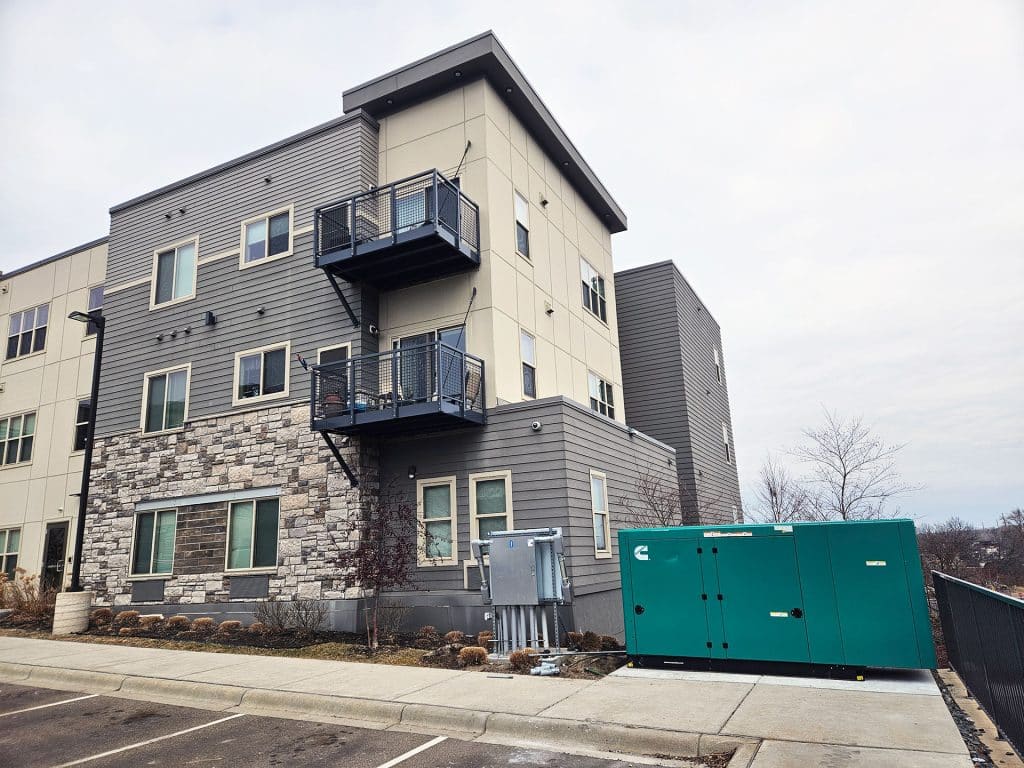
Protect Your Facility Before the Next Outage
Storm season and winter grid strain aren’t going anywhere. If your facility hasn’t had a load calculation done in the last few years, or you’re running on a generator that’s never been load-tested under real conditions, now’s the time to find out where you stand.
Call Holton Electric at (651) 769-4110 or contact us online to schedule a facility assessment.
Generator FAQs
How long does a commercial standby generator install take? Timelines vary by facility size and electrical complexity, but most commercial installs run anywhere from a few days to a few weeks once the load calculation and equipment order are finalized.
Do we need surge protection if we already have a standby generator? Yes. A generator protects against total outages. Surge protection guards against voltage spikes during normal grid operation, including the moment power is restored after an outage, which is actually one of the highest-risk transition points for equipment damage.
What size generator does our facility need? That depends on your actual load, not your square footage. A licensed electrician needs to calculate which systems must stay powered (life safety, refrigeration, IT infrastructure) and size the generator and transfer switch accordingly.
Is standby power required by code for healthcare facilities? Many healthcare facilities have legal backup power requirements tied to life safety systems. Requirements vary by facility type and use, so it’s worth a direct conversation with a licensed electrical contractor familiar with healthcare code compliance.
How often should a standby generator be tested? Most commercial systems should run a test cycle monthly under load, with a full inspection and maintenance check at least annually. A generator that’s never been tested under real conditions is a risk, not a safety net.
What equipment should be connected to a commercial standby generator? Critical systems typically include life safety equipment, emergency lighting, HVAC systems, elevators, refrigeration, servers, communications equipment, security systems, and other operations that cannot afford prolonged downtime. A load calculation determines which equipment should receive backup power based on your facility’s operational needs.