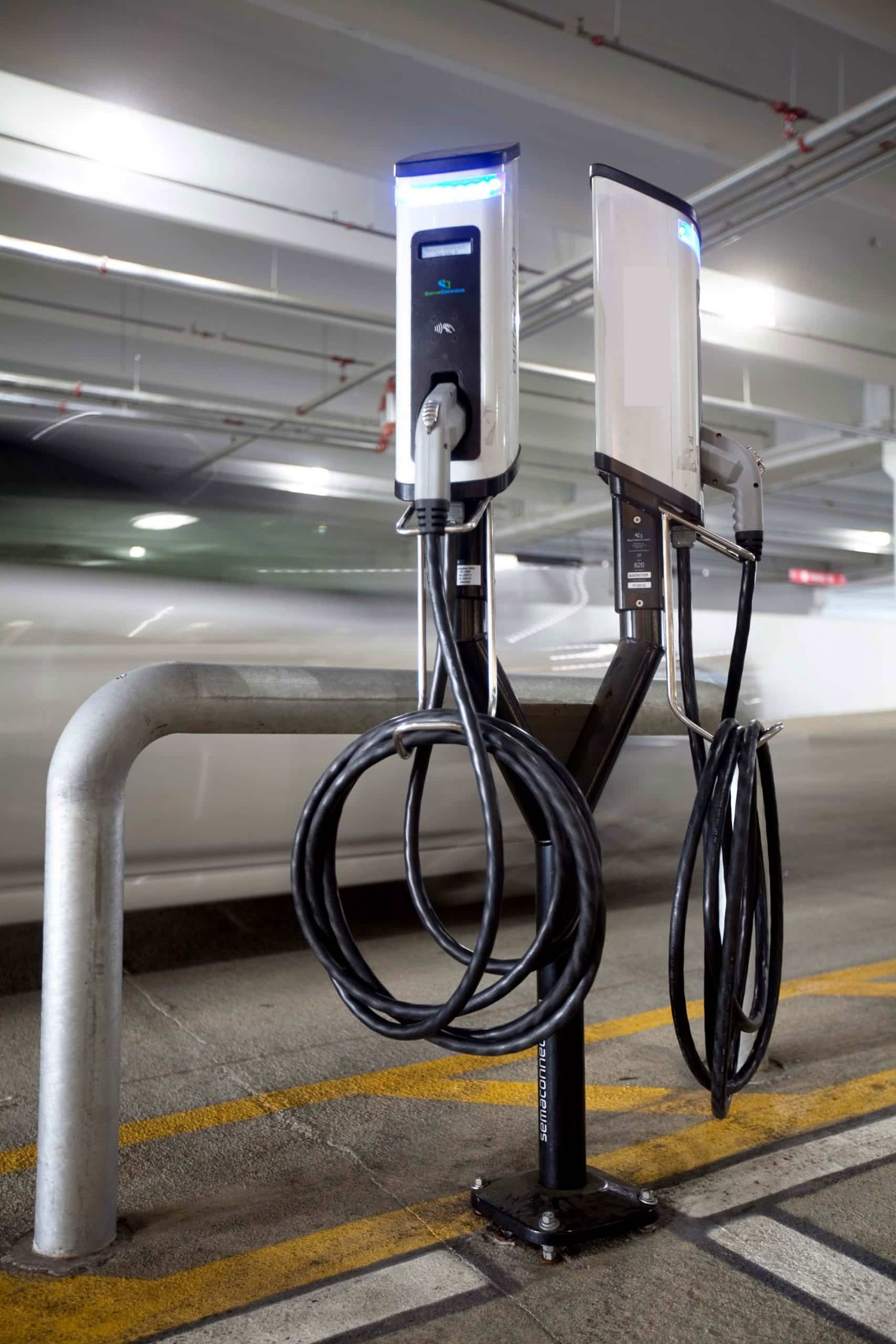
Electric vehicle adoption in Minnesota is growing. The state is on track for 717,000 registered EVs by 2030, based on a 2024 analysis projecting that 60% of new vehicle sales will be electric.
For businesses across the Twin Cities metro, that creates a real opportunity: commercial EV charging station installation is no longer just a sustainability statement.
Done right, it’s a customer amenity, a potential revenue stream, and infrastructure that increasingly affects where people choose to spend their time and money.
Commercial EV Charging Levels Explained
The biggest decision in any commercial EV installation is which charging level fits your use case. The answer depends on how long vehicles typically park at your location, how much electrical capacity you have, and what your budget looks like.
Level 1 (120V): Adds 3–5 miles of range per hour; best for overnight or long-stay parking
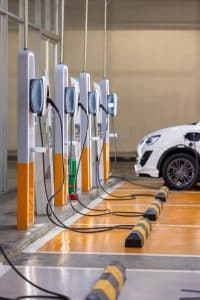
Level 2 (208–240V): Adds 10–30 miles per hour; ideal for retail, workplaces, and public lots
DC Fast Charging (Level 3): Charges up to 80% in 20–45 minutes; best for highways and high-traffic areas
The right charging level depends on how long vehicles typically stay and how you want the station to be used.
For most commercial properties, Level 2 offers the best balance of cost, speed, and everyday usability, while DC fast charging makes sense in high-traffic locations where quick turnaround matters.
What’s Involved in Commercial EV Charger Installation
A commercial EV charging project involves more than just installing chargers. It starts with your building’s electrical capacity and the infrastructure needed to support it safely and efficiently.
What’s involved:
- Electrical capacity check: Evaluate your panel and service to handle added load
- Potential upgrades: Older buildings may need panel or service entrance improvements
- Load calculations: Ensure multiple chargers can run without overloading the system
- Smart load management: Software can balance energy use across stations
- Site work for outdoor installs: Includes trenching, conduit, and weatherproof enclosures
- Cold-weather durability: Equipment must be built for harsh Minnesota conditions
- Permits and inspections: Required before the system can go live
- Networked system setup: Enables payment processing, usage tracking, and remote control
Taking the time to plan the electrical infrastructure and choose the right networked system upfront helps avoid costly upgrades later and ensures your charging setup performs reliably from day one.
EV Charging Site Planning Considerations
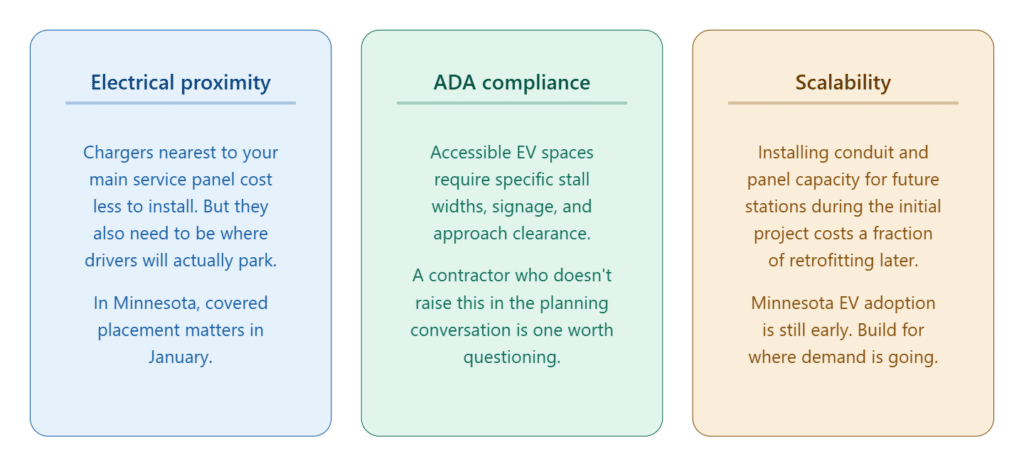
Location within your property affects both cost and usability. The three factors above are the ones that most often catch businesses off guard, and the ones a good electrical contractor should raise before any equipment gets specified.
ADA and scalability in particular tend to come up late in the conversation, when they should come up first.
Retrofitting a parking lot to meet accessible charging requirements after installation is expensive and disruptive. Running conduit for two future stations while the trench is already open costs almost nothing by comparison.
Start Your EV Charging Project with Holton Electric
Holton Electric installs commercial EV charging stations throughout Minnesota, including the Twin Cities metro and surrounding communities. Their licensed electricians handle every phase of the project, from the initial site evaluation and load calculations through permitting, installation, and final commissioning.
They also work with customer-supplied equipment if you’ve already purchased hardware.
Contact Holton Electric to schedule a consultation and get a plan built around your property’s specific electrical capacity and goals.
EV Charging Station FAQs
Do I need to upgrade my electrical panel for commercial EV chargers?
Often, yes. Multiple Level 2 stations or any DC fast charger will likely require a panel evaluation and possibly an upgrade. A licensed electrician needs to assess your current capacity before any equipment is specified.
Can I charge customers to use my EV stations?
Yes. Networked chargers with integrated payment systems let you set per-kilowatt-hour or per-session pricing. The right platform depends on your property type and volume expectations.
How long does a commercial EV charging installation take?
A straightforward Level 2 installation can be completed in one to two days. Larger projects with trenching, panel upgrades, and multiple stations typically run one to two weeks, depending on permit timelines.
Are there incentives available for commercial EV charging in Minnesota?
Yes. Xcel Energy and other utilities offer rebates for commercial charging installations, and federal tax credits under the Inflation Reduction Act cover a percentage of qualified equipment and installation costs. A contractor or tax advisor can help you identify what applies to your project.
Does Holton Electric install chargers from any brand?
Yes. Holton Electric has experience with all major EVSE brands and can install customer-supplied equipment or recommend hardware based on your specific use case.